May 6, 2025
Unstuck: When Digging Deeper Isn’t the Way Out
“If you find yourself in a hole, stop digging.”
—
Will Rogers
This saying may sound like common sense, but in
truth, it offers a profound lesson. It speaks to that critical moment of
self-awareness—not one that calls for more effort in the wrong direction, but
one that demands the courage to pause, to reflect, and to change course.
In life, our “holes” are rarely physical. They’re
often mental, ideological, or emotional—deep trenches we dig with our own
beliefs, opinions, and assumptions.
And even when we sense that we’re stuck, many of
us just keep digging.
The Hole We Keep Digging
We’ve all been there—clinging to an idea or belief that once gave us identity, direction, or certainty. But over time, something shifts. A new fact emerges. The belief no longer fits. And yet… we keep defending it.
We rationalize. We quote selectively and cite unrelated evidence. We surround ourselves with others who affirm us. What we don’t realize is—we’re not protecting the truth anymore. We’re protecting our ego.
I’ve seen this play out countless times. In conversations, I often see instances of people presented with clear, compelling counter-evidence, but instead of re-evaluating, they resist. They deflect. Over time, the falsehood becomes a kind of armor “their truth”. And eventually, they go beyond defense: they become evangelists for the belief. Aggressive. Dismissive. Even hostile to dissent; attacking those who challenge it.

But this isn’t intellectual strength.
It’s fear—dressed up as conviction.
The Courage to Rethink
This is where the dialectical method becomes powerful—a model of growth that invites us to move through ideas with honesty. It begins with a thesis, the belief or idea you currently hold; followed by an antithesis, an opposing idea or fact that directly challenges it; and culminates in a synthesis, a new perspective that either integrates truths from both sides or transcends them entirely.

When your initial belief or idea—your thesis—is directly confronted by a valid opposing idea or fact —antithesis— that’s not the time to dig in or build walls around your thinking. It’s a signal, not of defeat, but of opportunity—an invitation to pause and consider that there may be more to it. In that tension lies the chance to pursue a new perspective —synthesis— A more honest, refined, and balanced perspective that neither blindly defends the old nor impulsively embraces the new, but instead seeks understanding that transcends both. This process isn’t a sign of weakness—it’s a quiet act of courage. Rethinking doesn’t mean betraying your values; it means placing truth above pride. It’s the shift from clinging to certainty to reaching for clarity from defending your ego to allowing your mind, and heart, to grow.
When Beliefs Become Battlefields
Some people don’t
just cling to a flawed view—they build entire fortresses around it.
They:
🧠 Invent explanations to protect it.
🚫 Label dissenters as enemies.
🕹️ Manipulate systems to validate it.
📢 Spread it as unchallengeable truth.
Over time…
🧱 The belief becomes more than just a belief.
🪪 It becomes an identity.
And the deeper it roots, the harder it becomes to
step back. What could have been a private moment of growth becomes a public
crusade. A chance to evolve becomes a mission to convert.
But here’s the truth: the longer you stay trapped
in a faulty idea, the deeper the hole becomes.
And at some point, it’s not about being right
anymore.
🕊️It’s about being
free.
It’s Okay to be Wrong
There is profound
freedom in saying, “I used to think
differently.” It shows you're not chained to the past.
There is quiet strength in admitting, “I’ve
learned something new.” It means your mind is still open.
And there is real courage in declaring, “I’m
growing;” because, growth means choosing evolution over ego.
We need more people who are willing to unlearn, to
listen, and to rise above outdated convictions.
And here’s something we often overlook:
When
someone we dislike changes their mind and starts doing what we’ve long
advocated, it’s not a sign of hypocrisy. It’s a sign of strength.

Too often, our ego tempts us to vilify the change rather than welcome it. It wants to gloat. To mock. To dismiss their shift as too little, too late. We say, “Now they’re doing what we said all along!” as if change somehow invalidates their worth or it’s a weakness to evolve.
Yet the real power lies not in holding a position
forever, but in the willingness to evolve—even when it means adopting a truth
once rejected.
Let’s not punish people for growing.
Let’s not shame them for changing.
Let’s not let our resentment blind us to their progress.
Growth isn’t about how long you’ve believed something. It’s about how bravely you’re willing to leave it behind.
Find the Ladder, Not a Better Shovel
So, what do you do when you realize the belief you’ve been defending no longer serves you?
You don’t dig deeper.
You don’t justify
it with new excuses.
You don’t silence those who challenge it.
Instead:
🛑 Put the shovel down.
❓ Ask better questions.
🔥 Embrace the discomfort of change.
🧗 Climb out—and choose a better path.
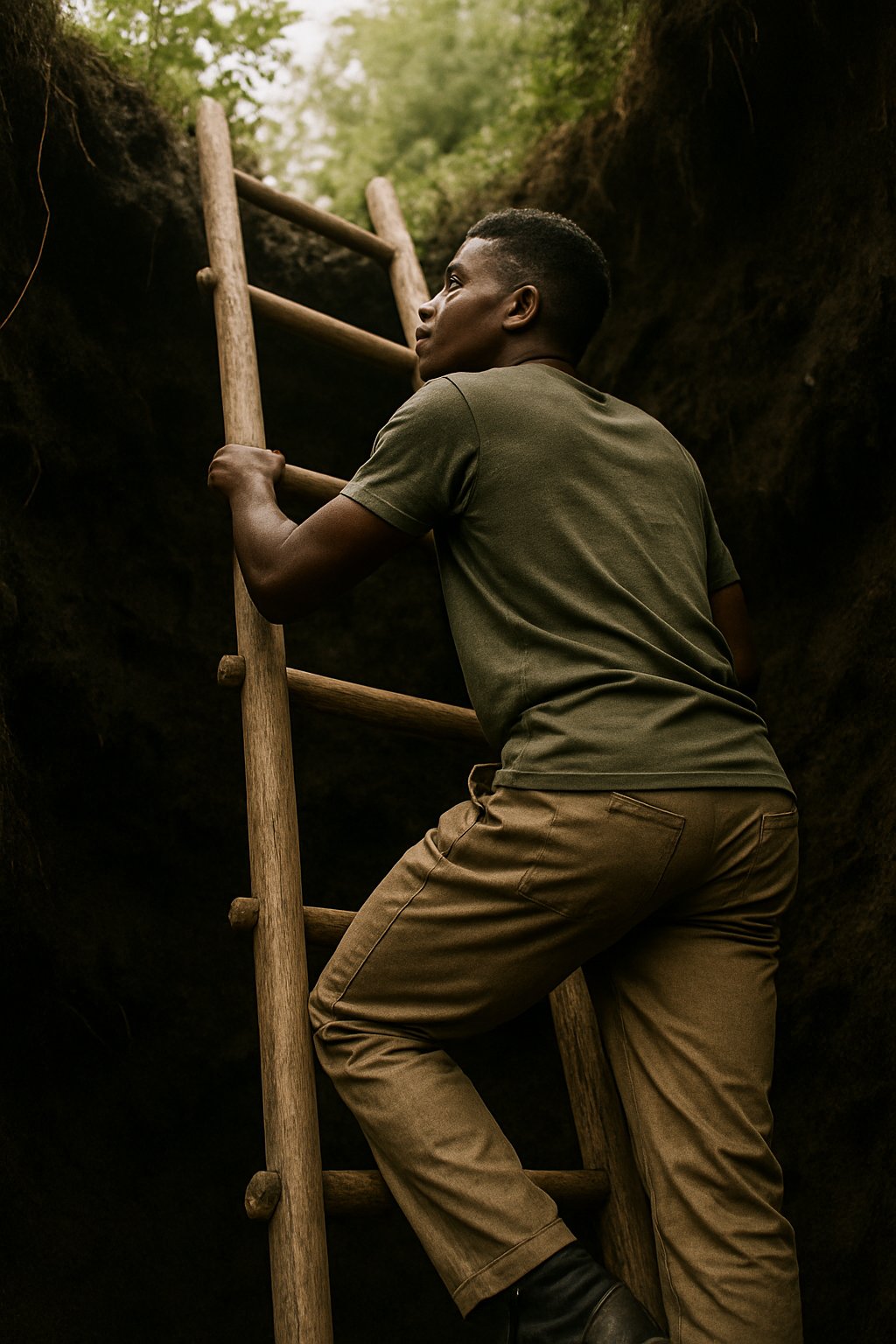
Growth doesn’t come from proving the old you was right. It comes from making room for the new you to emerge.
🧭 Reflection
“The mark of an educated mind is to be able to entertain a thought without accepting it.”
— Aristotle
🧠 Challenge your thoughts.
🤝 Welcome the ones that challenge you.
🔄 When the facts change, let your mind follow.
Because your greatest strength is not in loyalty
to the past—It’s in your openness to the future.
If you’re stuck in a hole, stop digging,— then, figure out how to climb out🪜